Shopping for a few acres near Little River-Academy can feel exciting until the details start piling up. You want room to breathe and a place that fits your goals, but the rules for water, septic, access, and taxes are different from a neighborhood lot. In this guide, you’ll learn the key checkpoints that protect your budget and timeline, plus who to call and what to put in your contract. Let’s dive in.
Start with jurisdiction
Before you write an offer, confirm who has authority over your tract. Ask if the land sits inside Little River-Academy city limits, in the city’s extraterritorial jurisdiction, or in unincorporated Bell County. Jurisdiction determines plat rules, utility options, and road standards. You can confirm at city hall and with the Bell County Engineer, who publishes subdivision and road information on the county site. Review the county’s development pages to understand how the County Engineer and Road & Bridge handle permits and road policies in unincorporated areas.
- City code and service policies are published in the Little River-Academy Code of Ordinances. The ordinance ties water and sewer approvals to the city’s Certificate of Convenience and Necessity, which defines where the city is responsible for utility service. Read the city’s utility and plat sections in the code for context.
- For unincorporated areas or ETJ questions, start with the Bell County Engineer’s subdivision and driveway guidance. The office can confirm plat requirements and which rules apply to your tract.
Helpful links:
- Review city utility and plat standards in the Little River-Academy Code of Ordinances.
- Explore Bell County Engineer development resources for subdivision, driveway, and road standards.
Water and sewer: know your options
It is common to see a water line in the road and assume you can connect. In practice, the city approves service based on CCN coverage and city standards. The Little River-Academy code regulates water and sewer improvements and notes that plat approval is not a guarantee of water availability or fire flow. Ask the city for current service maps and whether your tract is inside the CCN boundary before you rely on a municipal tap.
If your land is not served by city sewer, plan on an on-site septic system. That decision drives setbacks, system type, and cost, and it affects how much usable area you have for a house, shop, and drive.
Reference:
- See the Little River-Academy Code of Ordinances for how utility approvals relate to CCN coverage.
Septic permits in Bell County
In Bell County, the Bell County Public Health District administers septic permitting and enforces state on-site sewage rules. The district publishes the application, fee schedule, and latest procedures. As of materials posted by the district, a new affidavit process took effect on September 1, 2024, which requires certain affidavits to be recorded with the County Clerk before your application will be accepted. This is an easy detail to miss and can delay your build if you do not plan for it.
Your due diligence should include a site evaluation by a licensed septic designer or site evaluator, plus confirmation from the health district on the type of system that can be permitted. If the tract is small or has limiting soils, you may need an engineered system. Ask the seller for any prior permits or evaluations and get them in writing.
- Review Bell County Public Health District OSSF guidance and process.
- See the BCPHD septic application, which expects a licensed site evaluator, designer, and installer on the form.
Wells and groundwater
If city water is not available, you may need a well. Groundwater in Bell County is managed by the Clearwater Underground Water Conservation District. Domestic wells are commonly exempt from certain permitting thresholds, but registration with the district is still required. CUWCD maintains well maps, rules, and resources to help you understand local conditions.
Ask CUWCD for historic well logs in your immediate area and talk with a licensed driller about typical yields and drilling depth. These checks help you budget for drilling and pump equipment before you close.
- Start with CUWCD for well registration rules and local groundwater information.
Access and roads
Legal access is essential. Verify that your tract fronts a public road or has a recorded, permanent access easement. The Bell County Clerk records plats, easements, and deeds. A neighbor’s verbal permission is not enough for insurable or mortgageable access, so require a title commitment and a current recorded title search.
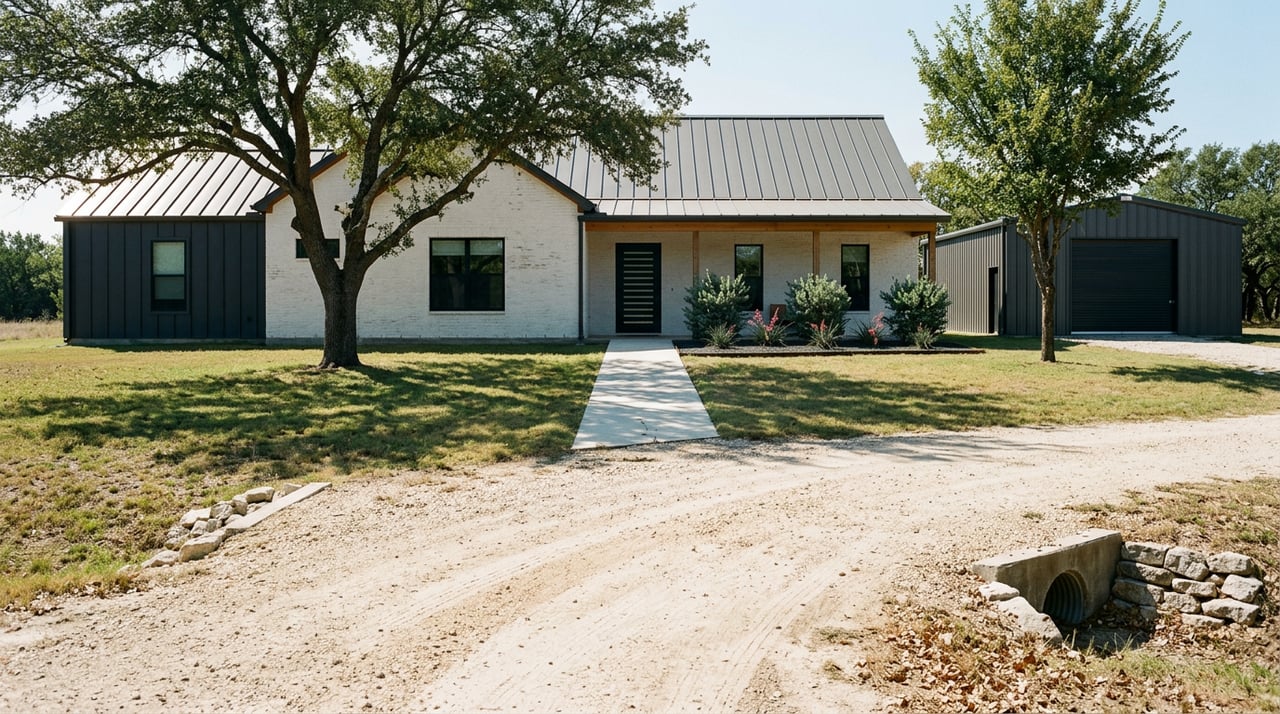
Driveway and culvert standards matter too. The County Engineer and Road & Bridge publish driveway permit requirements, the Master Road List, and acceptance policies for roads. These rules determine whether the county will maintain a road or if maintenance stays private. Ask for any private road maintenance agreement if the tract is reached by a private lane.
- Check recording and deed research with the Bell County Clerk.
- Confirm driveway, culvert, and road standards with the Bell County Engineer and Road & Bridge.
Floodplain and soils
Flood risk affects build location, insurance, and lender requirements. Use the FEMA Flood Map Service Center to see if any part of the tract sits in a special flood hazard area or floodway. If it does, you may need an elevation certificate and mitigation.
Soils also drive septic feasibility and foundation costs. A quick screen with the NRCS Web Soil Survey is a common first step, followed by a site visit from a licensed evaluator. The BCPHD septic application reflects this process, since it asks for a site evaluator and designer.
- Map your tract in the FEMA Flood Map Service Center.
- See the BCPHD septic application for the role of the site evaluator and designer in permitting.
How acreage is valued
Acreage is often priced on a per-acre basis, but two similar tracts can command very different numbers based on access, utilities, topography, and permitted uses. Appraisers reconcile per-acre sales with the property’s highest and best use. Features like barns, fencing, and ponds also change marketability and price for buyers who want hobby ranch capability or small development potential.
Property taxes and special appraisals can impact your holding costs. Bell County Appraisal District administers agricultural, timber, and wildlife management appraisals that may reduce taxes based on productivity rather than market value. If a tract currently benefits from a special appraisal and you change its use, rollback taxes can apply. BellCAD outlines how these appraisals work and what to check in the record.
- Read BellCAD guidance on agricultural appraisal and deadlines.
- See BellCAD’s land appraisal information for how rural land is analyzed.
- For deeper context on rural valuation methods and specialized topics, review resources from the American Society of Farm Managers and Rural Appraisers.
Plain-language example: Two five-acre tracts on the same road can sell at different per-acre prices. One may have city water inside the CCN, clean access, and a simple conventional septic option. The other may require a well, an engineered septic system due to soils, and a new driveway with culverts. The second tract’s added costs usually reduce what buyers are willing to pay.
Who to involve and when
Buying acreage goes smoother when you assemble the right team early. A land-savvy real estate agent helps you structure contingencies and coordinate due diligence. A licensed surveyor produces a boundary or ALTA survey that shows easements and access. A septic site evaluator, a licensed installer, and a well driller inform true build costs and feasibility.
You will also want a good title company and, for complex files, a real estate attorney who can review easements, mineral reservations, and surface-use restrictions. On valuation questions for larger or income-oriented tracts, consider an appraiser with rural credentials and methods suited to land. Industry guidance highlights the value of specialized land representation.
- BCPHD septic application shows the evaluator, designer, and installer roles expected in permitting.
- CUWCD is your source for well registration and local rules.
- ASFMRA provides rural valuation resources used by experienced appraisers.
Buyer’s 10-step checklist for 76554 acreage
- Confirm jurisdiction. Ask whether the tract is inside Little River-Academy city limits, in the ETJ, or in unincorporated Bell County, and learn which subdivision and utility rules apply. Start with the City Code and the Bell County Engineer’s resources.
- Verify legal access. Require proof of public road frontage or a recorded easement and review recorded documents through the Bell County Clerk.
- Call the County Engineer and Road & Bridge. Confirm driveway and culvert requirements, the Master Road List, and whether any private road could be accepted later.
- Clarify water supply. Ask the city if the tract lies inside the CCN and whether a municipal water connection is available per the city code, or plan for a well.
- Confirm septic feasibility. Review Bell County Public Health District OSSF procedures, including the affidavit recording step, and order a site evaluation.
- Screen flood risk. Pull the FEMA map, and if any portion is in a special flood hazard area, budget for elevation certificates and mitigation.
- Check soils. Use soils data as a first screen and follow with a licensed site evaluator to size and type your system based on field conditions. The BCPHD application outlines the expected professionals.
- Order a survey. A current boundary or ALTA survey identifies easements, encroachments, and access, which protects financing and title.
- Review taxes and special appraisals. Pull BellCAD records to see if agricultural or wildlife appraisal status applies and discuss possible rollback taxes.
- Assemble your team. Engage a land-experienced agent, title company or attorney, septic and well pros, a surveyor, and an appraiser with rural experience. Reference ASFMRA resources for valuation topics.
Red flags to pause on
- No recorded access or an unrecorded easement that relies on a handshake agreement. The County Clerk’s records should show a permanent, recorded right of way.
- Parcels that fall in a floodway or mapped floodplain that would complicate building and insurance. Confirm with FEMA’s map tool early.
- Soils that are rated very limited for septic, which can push you to engineered systems and higher costs. The BCPHD process is designed to sort this out before you build.
- Confusion over ETJ boundaries or CCN coverage that could change your utility plan. Use the City Code and county engineer resources to verify.
How we help
Acreage deals reward careful planning. If you want candid guidance on jurisdiction, septic feasibility, well research, access, and valuation, we are here to help you move forward with clarity and confidence. Reach out to Black White Real Estate for local, education-first support from advisors who work Bell County land every day.
FAQs
What should I confirm first when buying acreage near Little River-Academy in 76554?
- Start with jurisdiction, since city limits, ETJ, or unincorporated status control subdivision, utilities, and road standards; use the Little River-Academy Code and Bell County Engineer resources to verify.
How do I know if city water is available to my acreage near 76554?
- Ask the city whether your tract is inside its CCN and review the Code of Ordinances, since the city ties water and sewer approvals to CCN coverage rather than simply having a line in the road.
Who permits septic systems for acreage in Bell County?
- The Bell County Public Health District handles on-site sewage permitting, publishes procedures, and notes an affidavit recording step effective September 1, 2024; review their OSSF guidance before you buy.
Do I need to register a new domestic well in Bell County?
- Domestic wells are generally exempt from certain permits but must be registered with the Clearwater Underground Water Conservation District, which also provides well maps and local rules.
How can I verify legal road access to a tract in 76554?
- Require evidence of recorded public road frontage or a recorded easement and confirm through the Bell County Clerk; ask the County Engineer and Road & Bridge about driveway and culvert standards.
What tax items should I check on acreage in Bell County?
- Review BellCAD records for agricultural or wildlife special appraisal status and consider potential rollback taxes if you change the use; see BellCAD’s agricultural appraisal guidance for details.